> For the complete documentation index, see [llms.txt](https://docs.ohmyapp.io/main/llms.txt). Markdown versions of documentation pages are available by appending `.md` to page URLs; this page is available as [Markdown](https://docs.ohmyapp.io/main/guide/develop_app/4/block/list/ref.md).
# 단건 관계
다른 단일 메타에 있는 하나의 데이터에 접근할 수 있어요.
**단건 관계 블록은 언제 사용하나요?**
* 주로 다른 단일 메타에 있는 하나의 데이터에 접근해서 사용하고 싶을 때 사용해요.
* 예를 들면 유저가 가입 시 등록했던 '유저의 이메일 정보'를 커뮤니티 메뉴에서 표시하고 싶어요. (유저의 이메일 정보는 '유저 관리' 메뉴에 등록 된 데이터예요.) 그럴 때, 커뮤니티 메뉴에 단건 관계 블록을 사용해서 유저 관리 메뉴의 유저의 이메일 데이터에 접근해서 사용할 수 있어요.
**단건 관계 블록의 특징은 무엇인가요?**
* 하나의 데이터에 접근해서 사용할 수 있어요.
* 'ref' 또는 '참조한다' 라고도 해요.
* [항목 만들기](/main/guide/develop_app/2.md)를 우선으로 해줘야 해요.
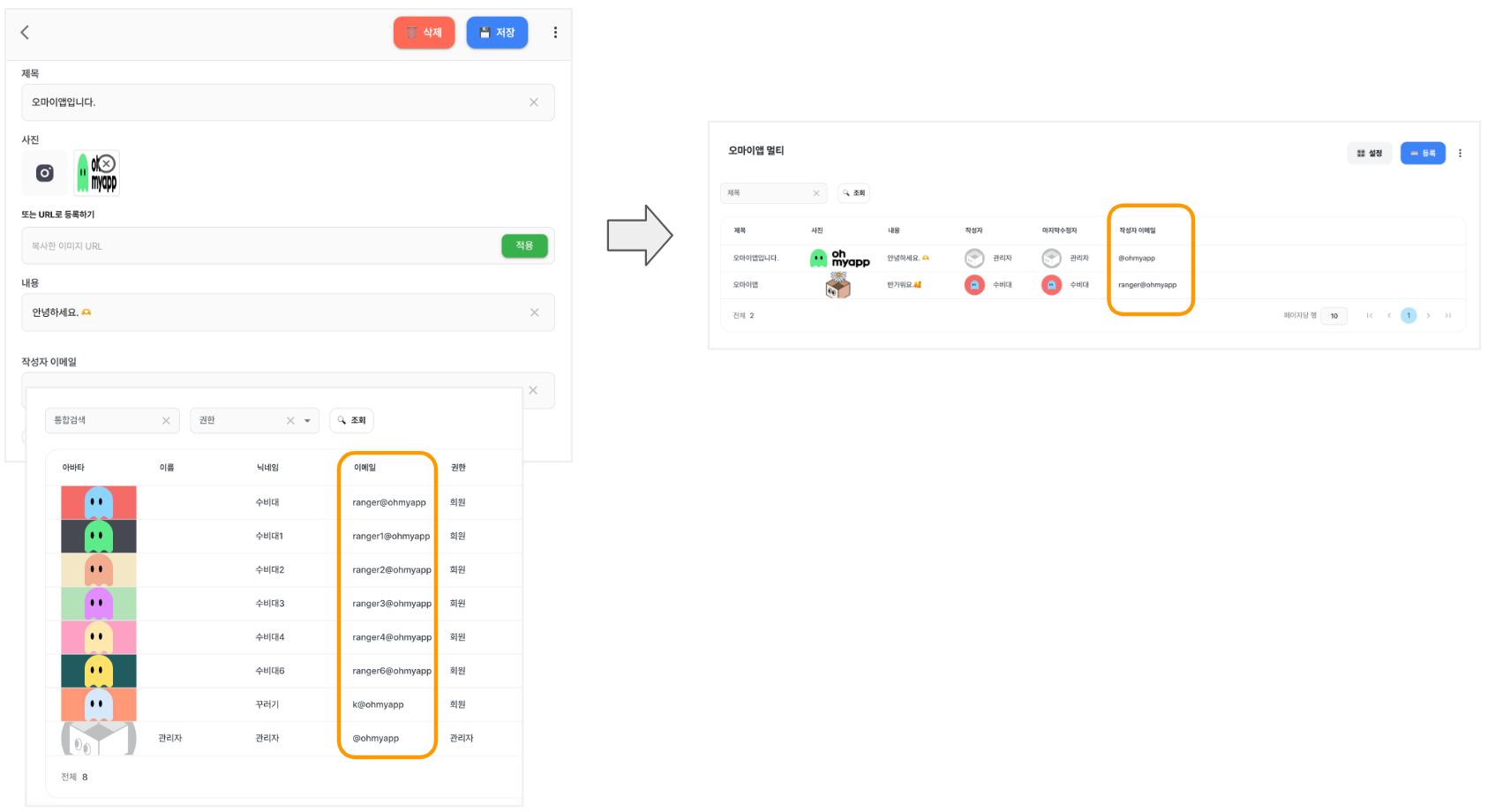
**관리자 웹에서 단건 관계 블록 적용 예시**
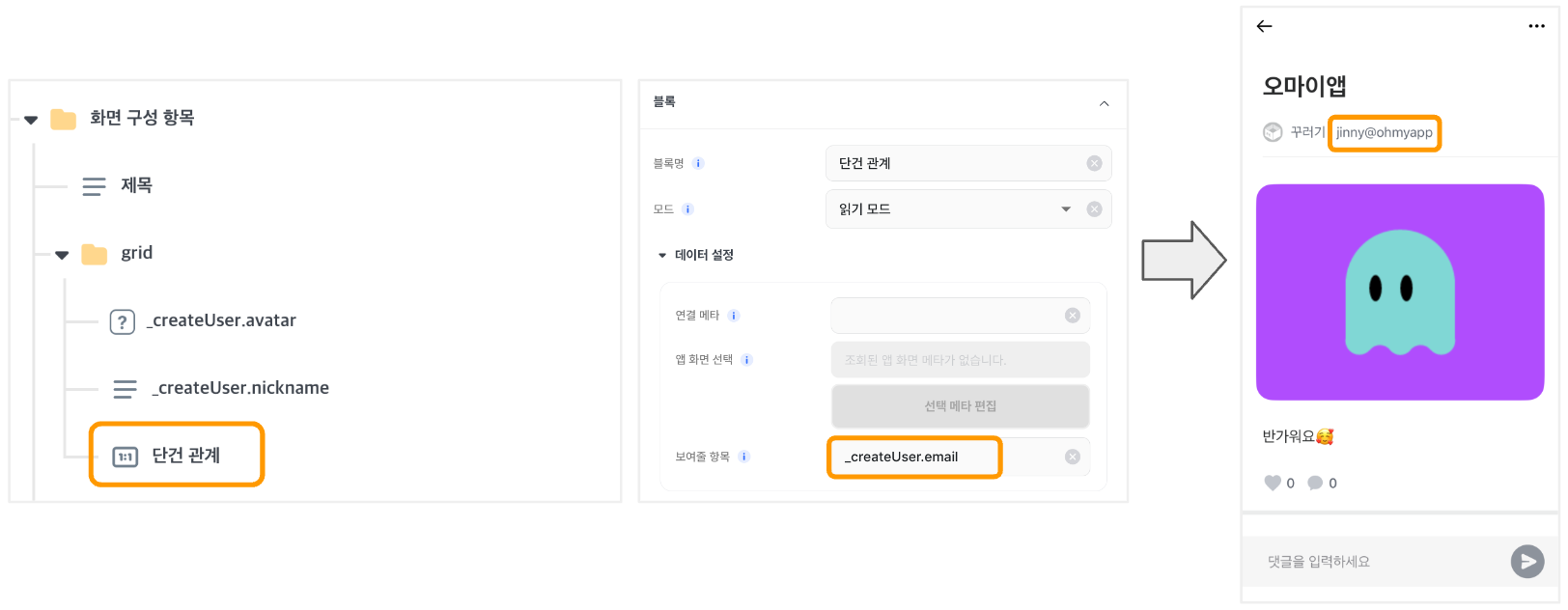
**앱 화면에서 단건 관계 블록 적용 예시**
> \#단건 관계, #1:1관계, #ref, #참조, #데이터 접근
2023.10.31 Jinny